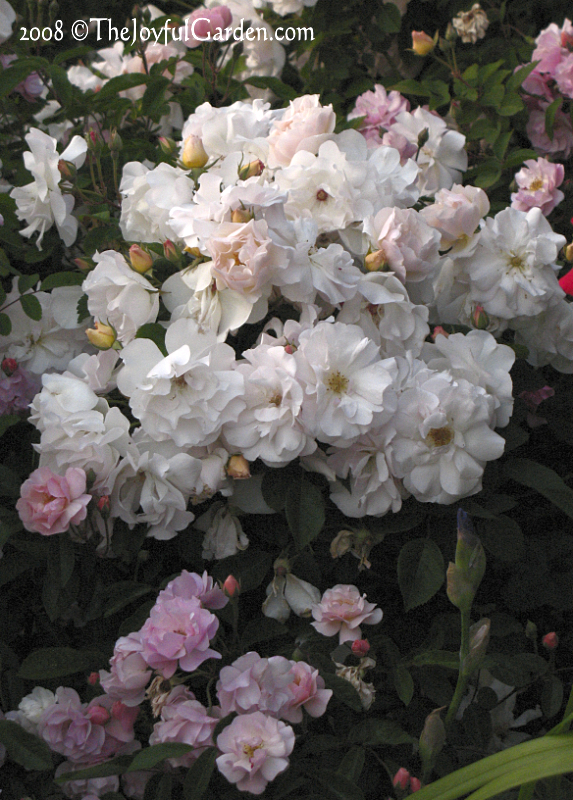
I have grown plants for over 50 years, beginning with abandoned, almost dead, potted begonias at my first apartment as a 20 year old. A rose lover since my childhood in Pakistan, I grew roses in large containers everywhere I lived, until my hubby and I bought our first house in 1990 (Sonoma County, CA / Zone 9b-10a). Starting with a bare lot, this was my initial landscape / garden design foray, which I enjoyed immensely! Developed a beautiful ‘Family Heritage’ Rose Garden full of rare and historic roses representing each of my family members. Had a small, beloved camellia collection, a few tall bearded irises, and expanded into growing fruit trees on our tiny urban lot.




In 2015, we moved to Prescott, Arizona (Zone 7ab-8a) with a gardening goal of developing a home orchard. Gardening at 5400′ with a challenging, high elevation climate in poor, stony, alkaline soil, with an annual average of 16″ of rainfall, snowy winters, and a long cold season is quite an effort!
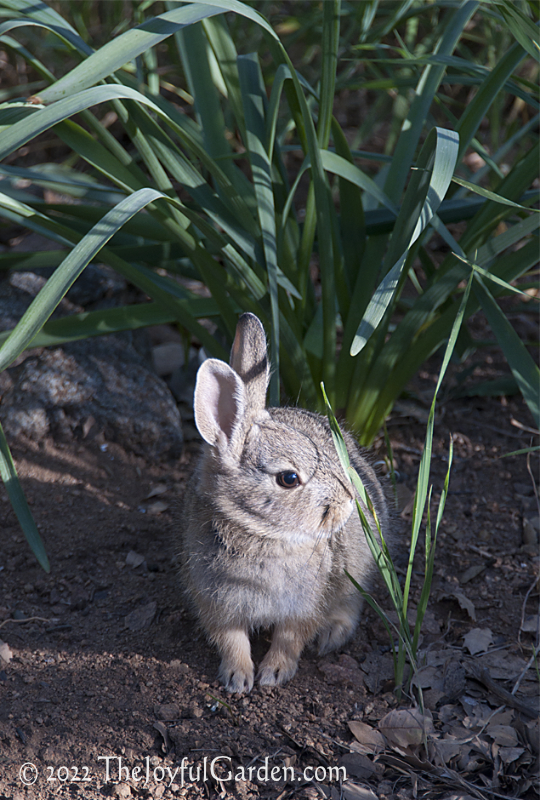
Lots of wildlife add other concerns to a person’s gardening efforts, munching buds and blooms, leaves, roots and rhizomes, rooting up bulbs, and trampling flower beds!



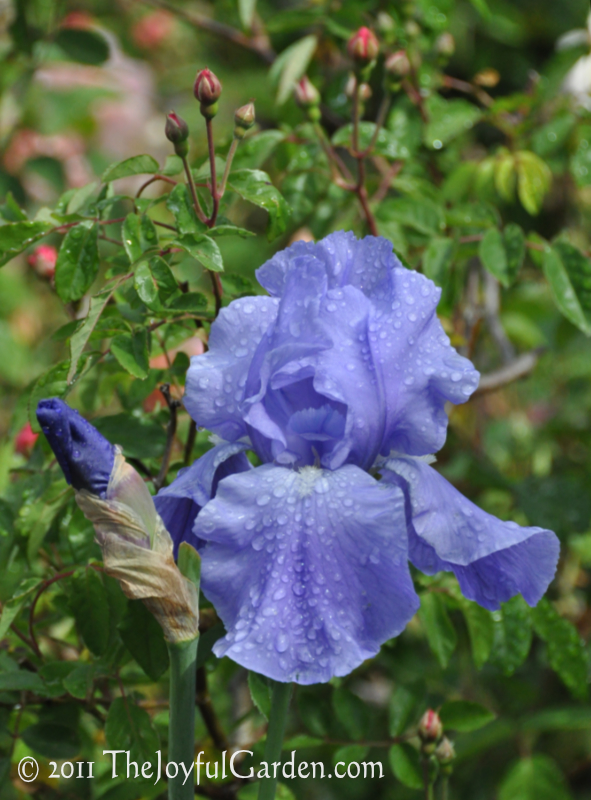
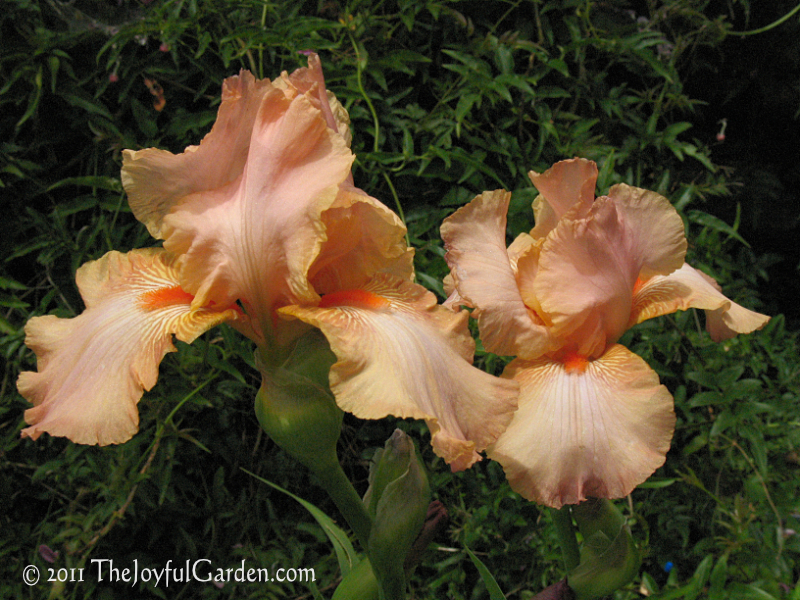
The prior property owners were not gardeners, so our south-facing, sloped, 3/4 acre space was a native plants (ie. lots of weeds) blank slate. I discovered three neglected iris beds and the Prescott Area Iris Society (PAIS), where I learned this climate is almost ideal for growing all hardy bearded iris. Many of the irises on our property are historic (over 30 years old). In the process of ID-ing the cultivars, I was introduced to the Historic Iris Preservation Society (HIPS) for which I am currently the Southwest Director.
PAIS asked me to function as their historic irises 2023 Guardian Garden Coordinator, tracking the historic irises inventory in their three public gardens:
~ Embry-Riddle Aeronautical University’s Memorial Garden dedicated to the 19 Granite Mountain Hotshots, whose lives were lost in the terrible 2013 Yarnell Hill wildlands fire.
~ The historic iris plantings at Sharlot Hall Museum, along with any iris cultivars introduced 30 or more years ago included in various iris collections planted at Yavapai College’s Richard Marcusen Sculpture Garden.
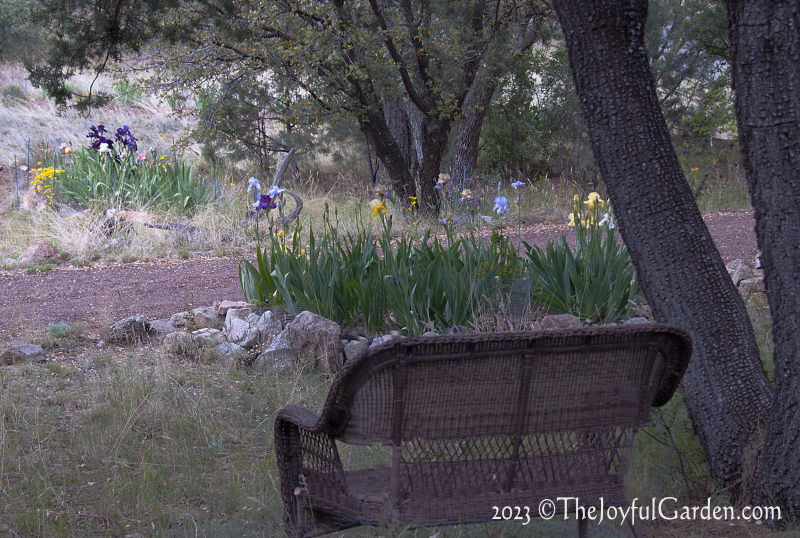
In the eight years I’ve been gardening here, the property has been transformed into a wildly natural landscape accented with flower beds planted with more than 222 iris cultivars. The gardens also include over 30 roses, several peonies, a growing daylily collection of 20, more than 1000 daffodils, 22 fruit trees, many fruiting vines and shrubs, permaculture rainwater berms and swales, hugelkultur raised veggie beds, an unheated greenhouse and more!